
Choosing the right tire changing machine can feel overwhelming with so many options on the market.
Whether you're outfitting a busy tire shop, upgrading a dealership service department, or setting up your home garage, the decision comes down to matching the machine's capabilities to your specific needs.
We've spent years helping customers navigate this decision. Understanding a few key factors makes all the difference between a purchase you'll regret and equipment that serves you for decades.
Table of Contents
- Factors to Consider When Buying a Tire Changer
- Why Choose Weaver Over Cheaper Alternatives?
- Common Mistakes to Avoid
- Weaver Tire Changer Model Comparison
Factors to Consider When Buying a Tire Changer
Volume and Usage Patterns
The frequency and intensity of use should heavily influence your decision. High-volume tire shops need heavy-duty machines designed for constant, daily operation with reinforced components and commercial-grade construction.
Dealership service departments often handle moderate volume but encounter challenging fitments on newer vehicles with increasingly large wheel packages. General repair shops benefit from capable machines that fit between bays without monopolizing floor space.
Home garage users may not need the same throughput capacity, but still want reliability when tackling weekend projects or seasonal tire swaps. Consider not just your current volume but where you expect to be in three to five years. Buying a machine that can grow with your business prevents the need for an early upgrade.
Wheel Clamping Range
Clamping range determines what wheel sizes your machine can handle, but wheel size and clamping range aren't always the same measurement. Wheels vary by flange width, lip design, and material thickness, which means you often need more clamping range than the stated wheel diameter.
If the largest wheel you expect to service is 22 inches, you may be safe with a 24-inch clamping range machine. If you anticipate servicing 24-inch wheels, consider stepping up to a 28-inch clamping range to accommodate different rim styles.
Pay attention to the lower range as well. As the upper range increases, so does the minimum wheel size. For shops that service ATVs, motorcycles, or compact car wheels, an adapter kit can extend the range in both directions on the same machine.
Wheel Protection Features
Today's vehicles increasingly come equipped with specialty aluminum, painted, and coated finish wheels that demand delicate handling. The wheel clamp style tire changer was developed specifically to address these needs, and modern machines have evolved to offer even greater protection.
Look for features like a protective turntable surface (such as Weaver® BLACK ARMOUR coating) that prevents scratches during clamping. Plastic duck heads contact the tire without marking the rim, and plastic protection sleeves shield wheels from tire tool contact.
These features matter whether you're a shop owner who can't afford customer complaints, a dealership protecting expensive factory wheels, or a home enthusiast safeguarding custom rims on your personal project.
Motor Power and Torque
Motor technology significantly impacts both performance and longevity. Standard motors typically deliver around 550 ft-lbs of torque, which handles most conventional tires adequately.
Variable speed constant torque (VSCT) motors represent the newer generation of technology, delivering approximately 815 ft-lbs of torque. That's nearly 48% more than standard motors. This additional power makes a real difference when working with low-profile tires, run-flats, and stiff sidewall performance tires
Beyond raw power, VSCT motors eliminate the traditional gearbox, which reduces maintenance needs and potential failure points. The ability to control speed also lets you work more precisely on delicate wheels while having full power available when needed.
Low-Profile and Run-Flat Tire Capability
Low-profile tires with stiff sidewalls and run-flat tires present unique challenges that can turn a routine tire change into a frustrating battle. The key to handling these tires efficiently lies in having the right equipment features.
A bead press tool helps push the tire bead down into the drop center where it needs to be for removal. An assist arm holds the bead in place during both mounting and demounting operations. Without these features, what should be a one-person job often requires two or three people wrestling with the tire.
If you regularly encounter performance vehicles, luxury cars, or newer SUVs, the ability to handle these tire types smoothly directly impacts your efficiency and profitability.
Build Quality and Durability
The tire changer market includes everything from budget imports to premium equipment, and the differences in construction become apparent over time. Commercial-grade machines feature heavier steel construction, reinforced columns to handle leverage forces from stiffer modern tires, and quality components designed for years of service.
Manufacturer heritage matters too. Companies with decades of experience have refined their designs through real-world feedback. Look for certifications like ISO9001 manufacturing standards and CE certification that indicate quality control processes.
The cheapest option often costs more in the long run when you factor in repairs, downtime, and premature replacement.
Support and Warranty
What happens after the sale often separates a good purchase from a great one. Evaluate the warranty coverage (typical commercial machines carry one year on parts and six months on air components), but also consider who handles the warranty.
Some manufacturers require working through third-party service networks, while others handle parts and support directly. Direct support means faster resolution when issues arise. You're talking to people who know the equipment intimately rather than intermediaries.
Modern "plug-and-play" component design means many repairs can be guided over the phone without costly service calls. But this only works if the supplier maintains full parts inventory and knowledgeable staff to help you troubleshoot.
Power and Space Requirements
Before purchasing, verify that your facility can accommodate the equipment. Most tire changers operate on standard 110V/60Hz single-phase power with a 20-amp circuit, compatible with typical shop electrical systems.
You'll also need compressed air supply, usually in the 150-175 PSI range with 5 CFM capacity. The machine footprint varies by model, so measure your available space and ensure adequate clearance for the swing arm to rotate fully.
Home garage users should pay particular attention to these requirements. Residential circuits and portable compressors may need upgrades to properly power commercial-grade equipment.
Why Choose Weaver Over Cheaper Alternatives?
The internet is flooded with tire changers at temptingly low prices, but we've seen the aftermath when those machines fail mid-job. Weaver® tire changers are manufactured by Nexion SpA, the Italian company that invented the wheel clamp style tire changer in 1962.
Every machine comes from an ISO9001 certified factory, the same production lines that build equipment for the biggest names in the industry. When comparing failure rates and durability, we see no difference between our equipment and machines costing hundreds more.
The price difference between Weaver® and big-name brands isn't about quality. It's about distribution. We purchase directly from the manufacturer and sell direct to you, eliminating the marketing overhead and sales rep commissions that inflate prices elsewhere.
What you won't find at a lower price point is the support that comes with every Weaver® purchase. We handle warranty claims directly, maintain full parts inventory, and staff knowledgeable technicians who can troubleshoot issues over the phone.
When your tire changer goes down, downtime costs money. That's true whether you're a shop owner losing revenue, a dealership with customers waiting, or a home user stuck mid-project on a weekend.
Do You Really Need an Assist Arm?
The assist arm transforms how you handle difficult tires. When working with low-profile tires, run-flats, or stiff sidewall performance tires, the assist arm holds the bead in the drop center of the wheel while you work keeping it a 1 man job. The alternative may require 3 men and 6 tire tools.
Without it, you're fighting the tire's natural tendency to pop back up. That's a battle that often requires multiple people and plenty of frustration.
Beyond efficiency, the assist arm prevents damage. When a technician is wrestling with a tire manually, the risk of scratching an expensive alloy wheel increases dramatically. The controlled, consistent pressure of an assist arm eliminates that variable.
This matters whether you're a technician changing dozens of tires daily, a dealership protecting high-end wheels on new vehicles, or a home enthusiast protecting the custom rims on your project car.
If you service primarily standard passenger vehicles with conventional tires, you can start with a base machine and add the assist arm later. But if low-profile and performance tires are already part of your regular workload, the combo packages deliver better value than purchasing separately.
Common Mistakes to Avoid
- Buying based on price alone: The cheapest tire changer often becomes the most expensive when repairs and downtime enter the equation.
- Underestimating clamping range needs: Wheel sizes keep growing. The 22-inch wheels that seemed huge five years ago are increasingly common, and 24-inch options are following the same trend.
- Ignoring the tire types you'll encounter: If you turn away low-profile or run-flat work because your equipment can't handle it, you're leaving money on the table.
- Overlooking support and parts availability: A great machine becomes a paperweight if you can't get replacement parts or troubleshooting help when needed.
- Not matching the machine to your environment: High-volume shops need commercial-grade durability, while home users may have different priorities but still shouldn't compromise on core quality.
Weaver® Tire Changer Model Comparison
All Weaver® tire changers include a bead blaster, BLACK ARMOUR turntable protection, and plastic duck head as standard equipment. Every model handles tires up to 49 inches in diameter with a bead breaker width of 3-15 inches.
|
Specification |
W-894XP |
W-898XP |
W-8940-VSCT |
W-8980-VSCT |
|
Clamping Range |
11-24" |
12-28" |
11-24" |
12-28" |
|
Motor Torque |
550 ft-lbs |
550 ft-lbs |
815 ft-lbs |
815 ft-lbs |
|
Max Tire Diameter |
49" |
49" |
49" |
49" |
|
Bead Breaker Width |
3-15" |
3-15" |
3-15" |
3-15" |
|
Motor |
1.5 HP Standard |
1.5 HP Standard |
1.5 HP VSCT |
1.5 HP VSCT |
|
Variable Speed |
No |
No |
Yes |
Yes |
W-894XP & W-898XP
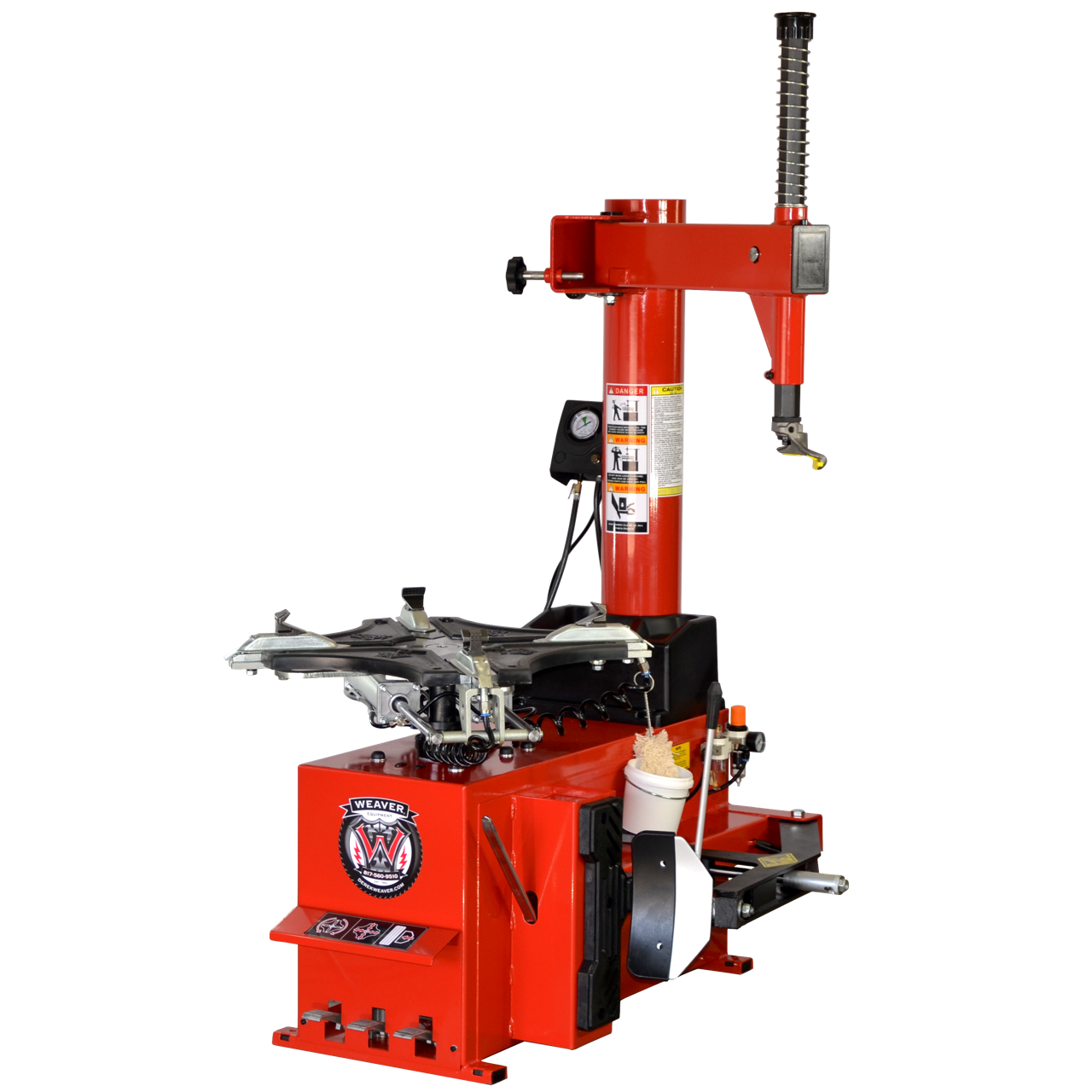
The W-894XP and W-898XP share the same standard 550 ft-lbs motor and differ only in clamping range. The W-894XP covers an 11-24 inch inside clamping range, while the W-898XP steps up to 12-28 inches for larger truck and SUV wheels.
Both handle conventional passenger vehicle and light truck tires efficiently. Ideal for all shops, commercial or low volume.
W-8940-VSCT & W-8980-VSCT
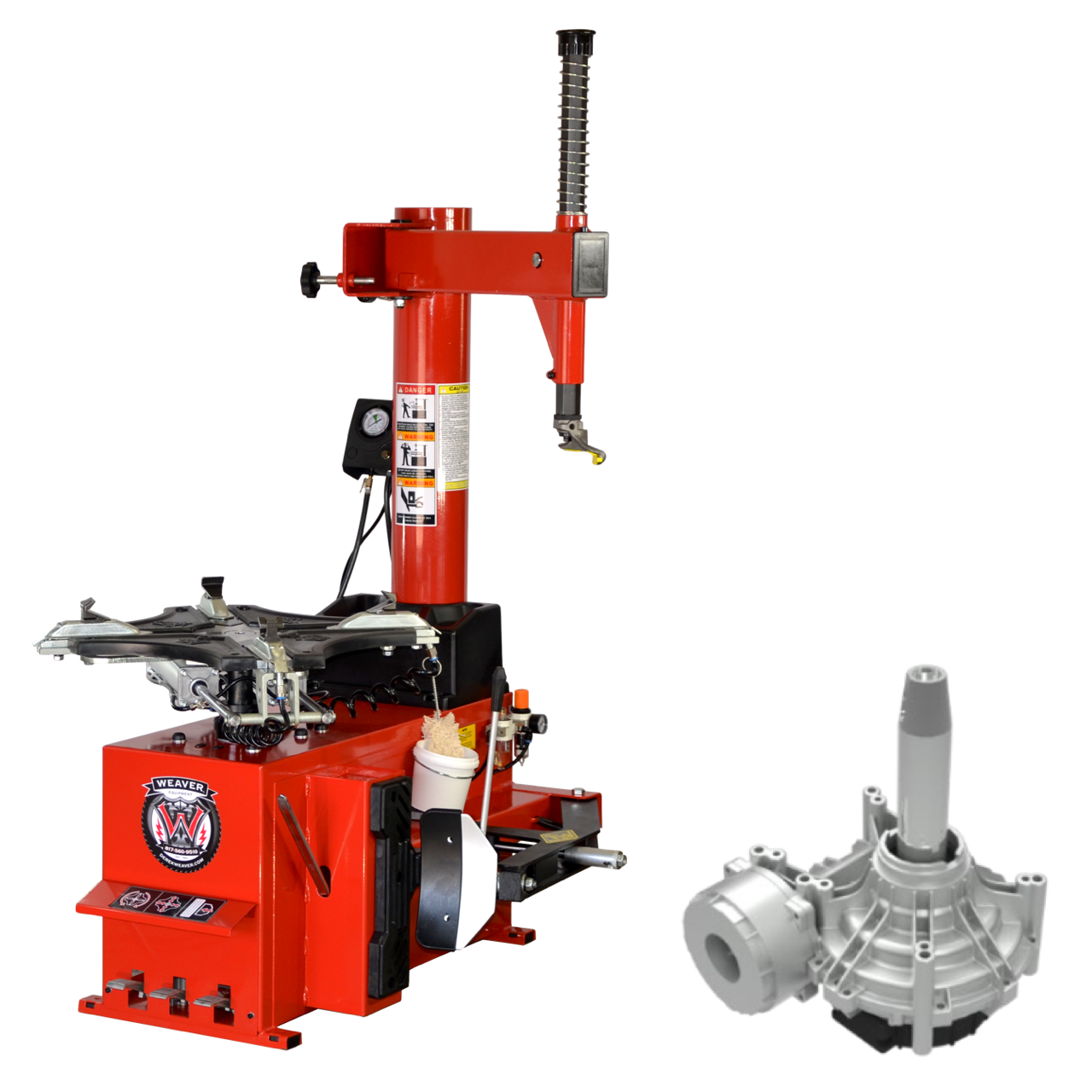
The W-8940-VSCT and W-8980-VSCT both feature our variable speed constant torque motor delivering 815 ft-lbs of torque. The gearbox-free design reduces maintenance while the added power handles low-profile and run-flat tires with ease. They differ only in clamping range: the W-8940-VSCT covers 11-24 inches, while the W-8980-VSCT extends to 12-28 inches.
A strong choice for tire shops, dealerships, and home garages working with difficult tires.
Combo Packages with W-PL240 Assist Arm
Buying a combo package will lower the costs and consolidate shipping.
Ready to Choose Your Tire Changer?
Every Weaver® tire changer ships with a complete operation manual, and our technical support team is available to guide you through any questions. We've been selling and servicing quality equipment since 1984 because we source products that perform and stand behind them after the sale.
Browse our complete tire changer selection, or call us directly to discuss which model fits your needs. With Weaver, you get professional performance for tire shops, dealerships, and home garages alike, without the inflated price tag.
